A magazine article
written by crew member
and photojournalist
Robert Bowling
A magazine article written by crew member and photojournalist
Robert Bowling
END of the SPEAR


"Without question, this is one of the most compelling Stories of the 20th century"
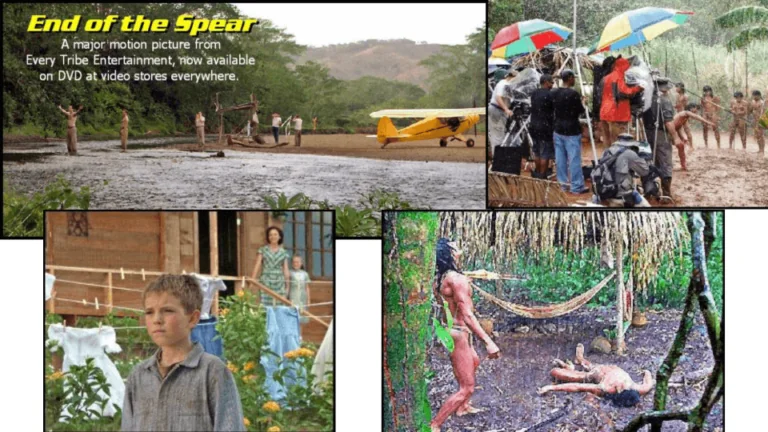
Photojournalist and crew member Robert Bowling recounts the adventure of being part of a motion picture production, “End of the Spear” is based on the true story of the Waodani tribe of Ecuador, the martyrdom of five missionaries in 1956, and the ensuing miracles of redemption and forgiveness.
On the set of "End of the Spear"
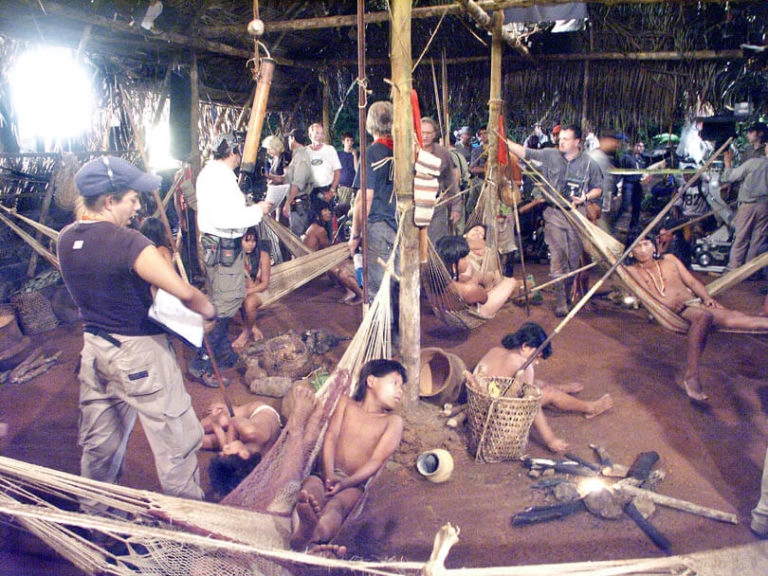
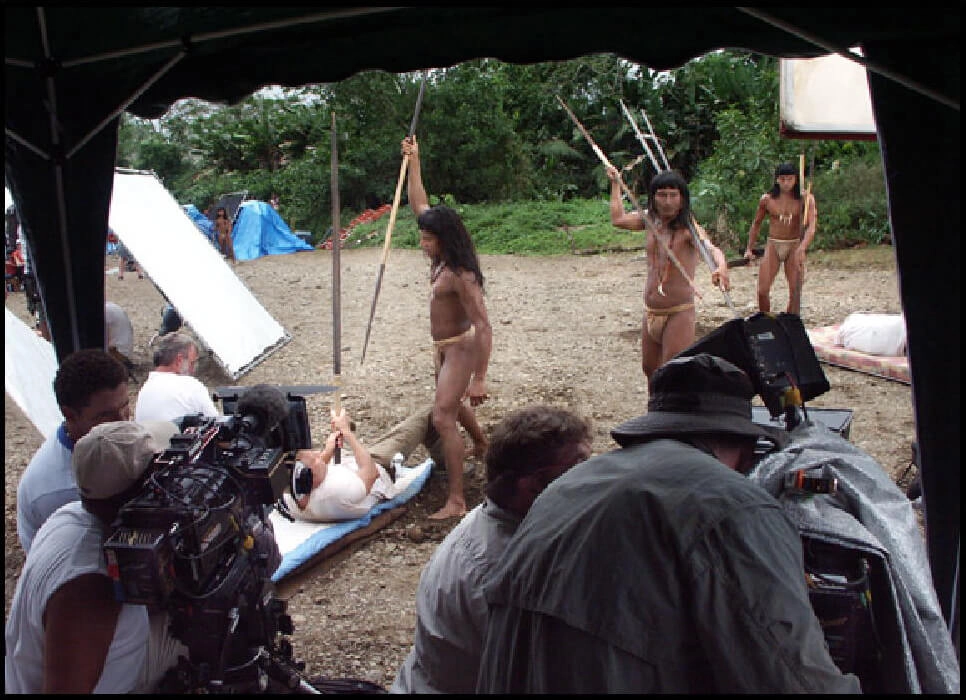
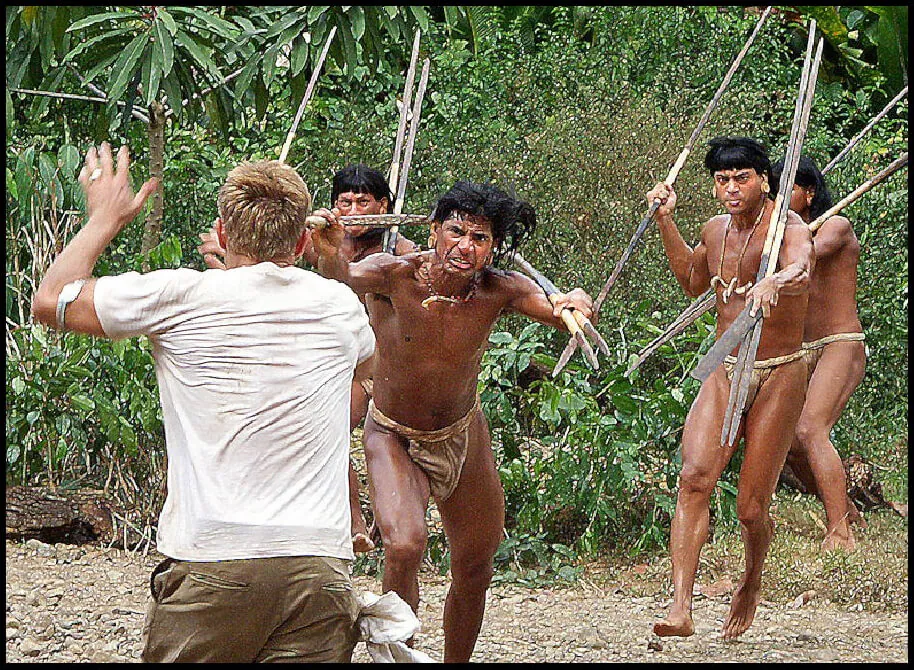
Here I am, hunkered down in the corner of an actual tribal hut late at night when, suddenly, a boy shouts, “Moipa, Moipa!” and all hell breaks loose. Spears fly, people scream, mothers grab their babies, and the large bamboo and grass hut vacates under a gruesome attack. As the natives race outside, warriors and women with machetes from another tribe are waiting. Complete bedlam ensues.
“CUT!” the director yells, and the activity quickly ceases. Our tribal actors return to their hammocks, the spears are carefully raised back up their titanium guide wires, and many of us crew members reach for yet another Gatorade. Such is the on again, off again world of a major movie production.
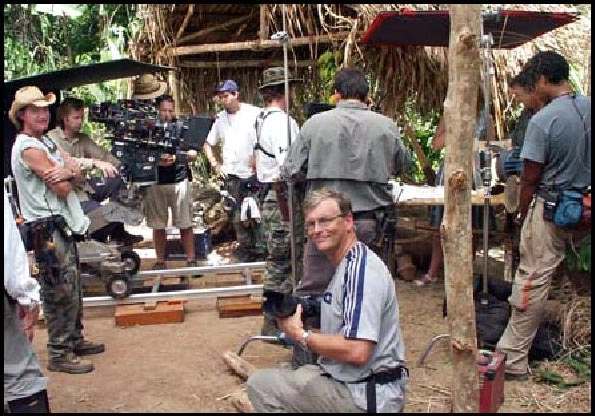
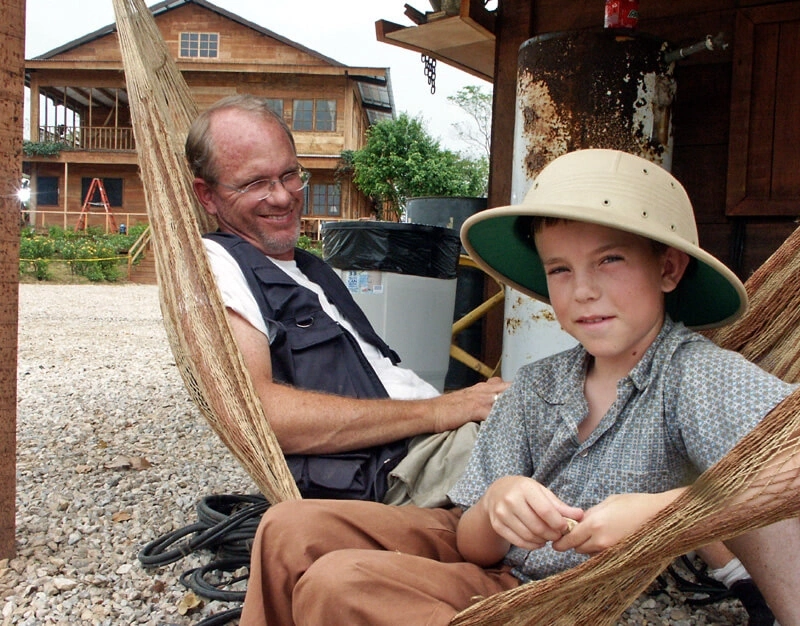
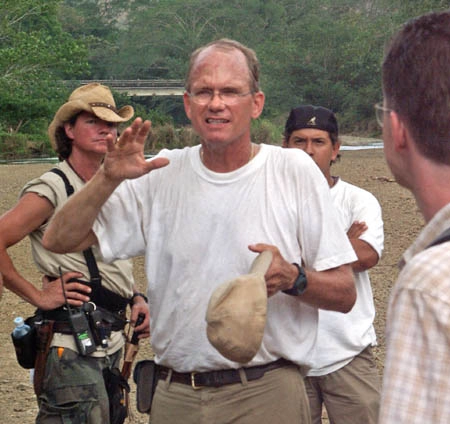
It’s my first such movie gig after stints at three newspapers as a photojournalist, and it’s my third day in Panama on the set of “End of the Spear.” I’m the still photographer, resulting in what would become my usual clandestine position squished, squashed, or perched in some god-awful spot attempting to fulfill my duties of taking hundreds of PR shots without rankling any of the sometimes testy crew.
The first week is all night shooting. “Breakfast” at 5:00 PM, set call at 6:00, and we work all night until first light. It’s sometimes exciting with the spears flying or natives running about, but other times it is excruciatingly boring while lights and cables are moved, extensive rails are built into the dirt for the camera dollies, and, in the waning hours before daybreak, zombie-like crew chug their 20th hydration-of -choice in the muggy jungle night.
We were all quite thankful to stumble back to the Hotel Melia, (formerly the CIA “School of the Americas” near Colon, Panama) and attain blissful sleep in an air-conditioned room. No one really cared what the hotel use to be. We were just glad we had A/C and a swimming pool.
Killers
A few weeks hence we were getting into a groove as we chronicled the true story of warring tribes of Waodani natives in the Amazon basin of Ecuador in the 1950’s and the then-infamous attack on American missionaries. Anthropologists have since learned that there was a 60% homicide rate as a way to settle disputes among these tribespeople. Someone took your food, your manioc root? Spear them. Someone looked at your sister the wrong way? Kill them. Hmmm. This may sound familiar to some within our own culture.
In 1999, when approached about telling their story on film, the Waodani initially said “no.” But when told about the Columbine shootings and the violence in most U.S. cities, the elders met and decided, “if our story could help your people not kill like we use to, and live well like we do now, then you can make this movie.” And they became advisors to the production and even taught the Embera people of Panama to act like the Waodani of Ecuador.
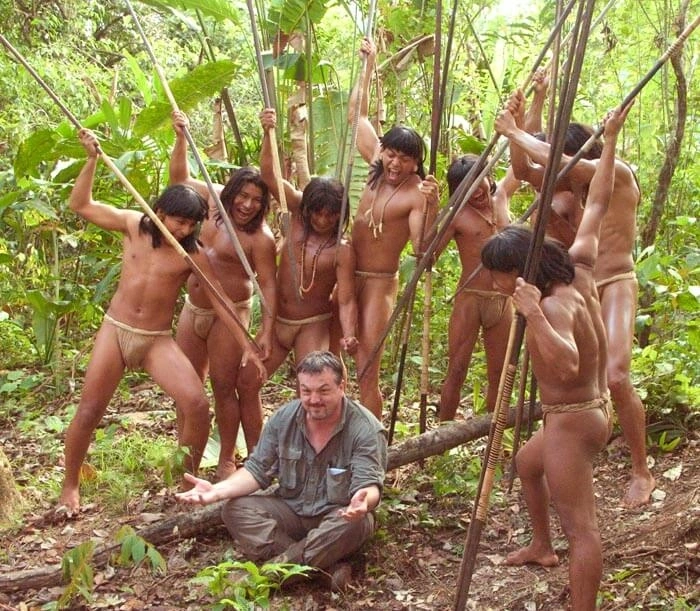
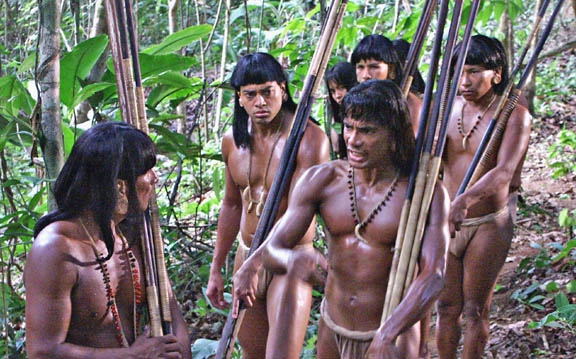
The Embera people were an amazing blessing to the entire project. They, too, met with their elders and decided they must help tell this story. Only four North Americans would act as Waodani, the rest were Embera, very sincere and naturally talented actors. (See page on Embera coming soon this website.)
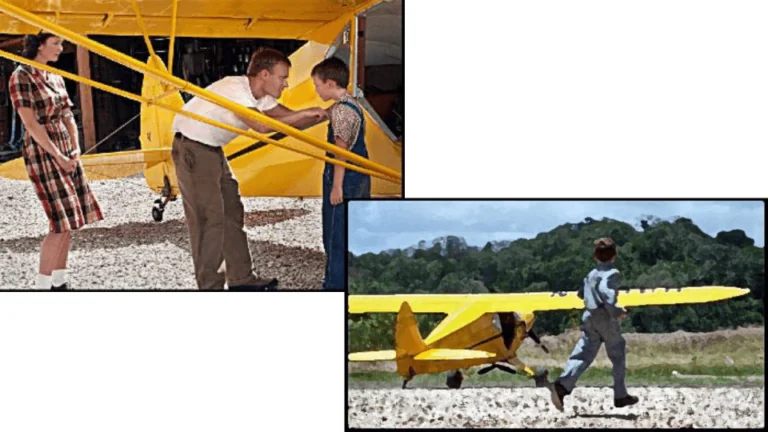
We were now well into day shoots, still 12 hours long, but often with a refreshing breeze coming up in the afternoon, and, a more normal sleep cycle. On this day we are re-creating the “bag-drop” used by the five missionary men in 1955-56 to reach the remote and violent people. An attempt is made of circling the single prop
Piper airplane high above in a tight circle while the container at the end of 2000’ of line reaches a quiet central point down below. But it just won’t work today. The original Nate Saint had perfected the technique, but our stunt pilot, his son Steve Saint, an experienced jungle pilot in his own right, just hasn’t had enough practice.
So we use a rigging crane and simulate the bucket coming down to earth as the quizzical natives run out of their huts and grab the machete gift and the photos showing the missionary men adorned with Waodani headbands. One scene requires a teenage girl to grab onto the bucket and try to fly away with it. She wants to reach her sister Dayumae, who ran to the foreigners years before to avoid the tribal culture wherein offspring were often killed along with a dying, (speared) parent.
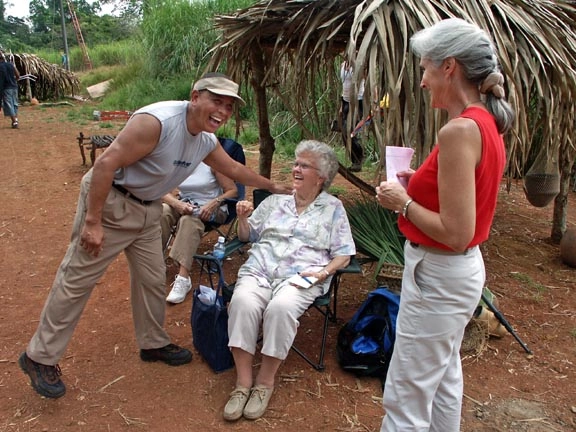
The crew is becoming more of a family now as we hit our stride getting the work done in the hot, dusty environment. Marge Saint Van Der Puy, widow of Nate Saint comes to visit and is a delight for all the crew to meet. What a wonderful and historic journey I am on to be involved with this project and meet Marge and Steve Saint, Kimo and Mincaye of the Waodani, and the visionary producers who are determined to tell the story, both in documentary form (Beyond the Gates of Splendor) and now a dramatic version, End of the Spear.


The Saint House
A huge set is built which will become the Saint house, used for a number of scenes with Nate Saint (Chad Allen), young Stevie, and the missionaries. Young Stevie, played by Chase Ellison, is a key element in the telling of the story. Director (and co-screenwriter) Jim Hanon says that Stevie is the literary device through which the viewer connects with the main part of the story. For the purpose of the film, the character is eight years old, however the real Stevie was only four when his father was killed. It is one of only a few changes made from the actual facts of the story. In most cases, great pains were taken to adhere closely to the original events. Even if the timeline was compressed, the order and meaning of events remains intact.
I read quite a few reviews online after the movie was released and came across a very negative one from the “Village Voice” in New York City. It was less a review than a diatribe to say, “how dare” these missionaries go thousands of miles to impress their beliefs upon another culture. But this man obviously does not know about the grace and love which God had kindled in their hearts to give them such passion and perseverance. These missionaries were very cognizant of tribal customs and societal differences. They were not there to change those so much as to reach out with the truly good news that God has redeemed us from our sinful ways and wants to give us a life of purpose, meaning, and joy – within our own cultures. Read “Jungle Pilot”
by Nate Saint, “Through Gates of Splendor” by Elizabeth Elliott, or “End of the Spear” by Steve Saint, and you will see their true heart to (literally) save these people from their violent and deadly ways, and guide them toward the Spirit of love from the great heart of God.
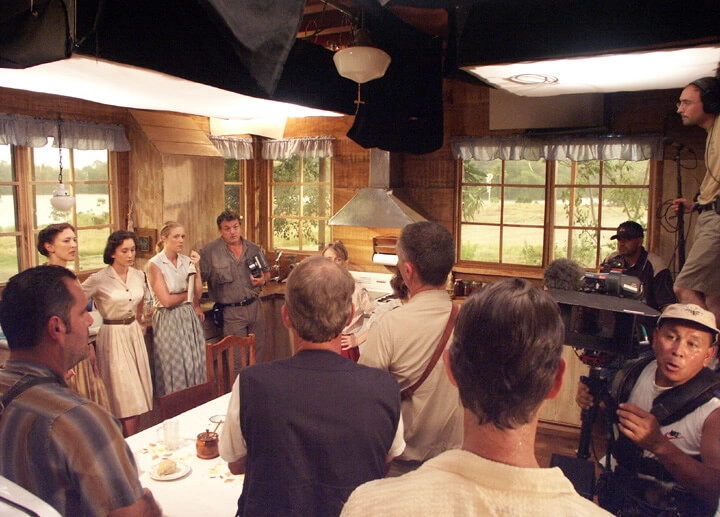
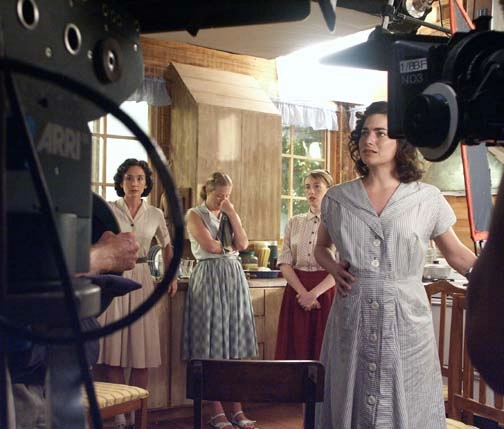
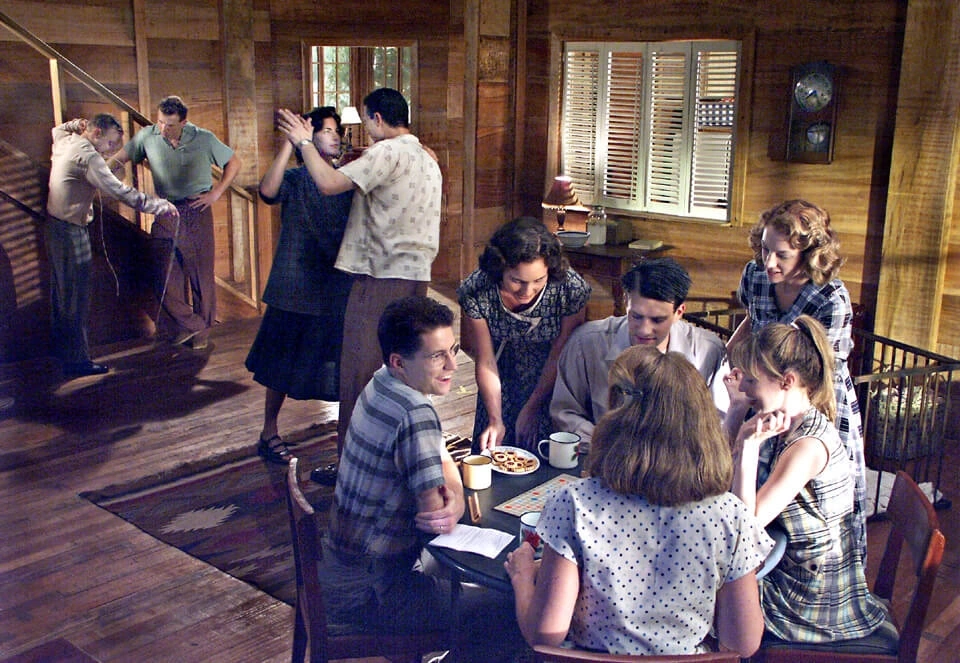
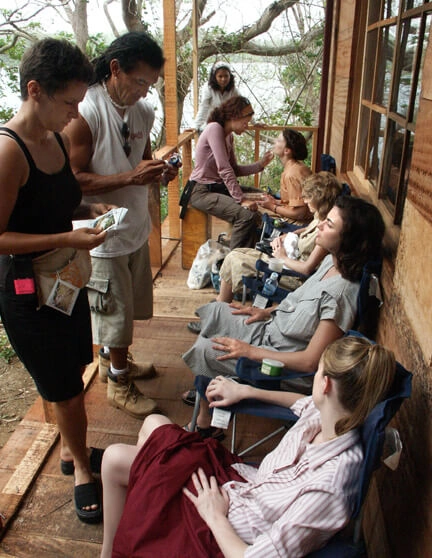
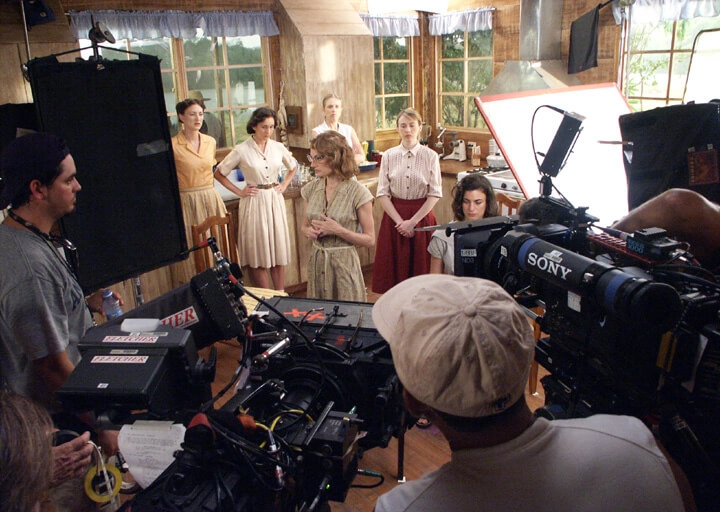
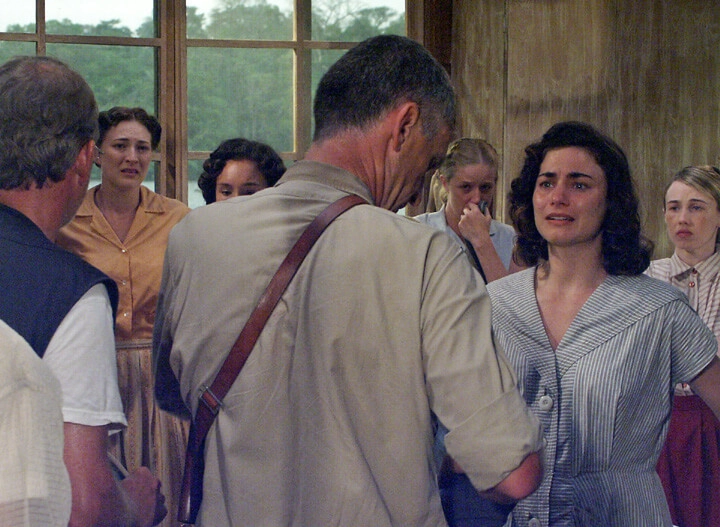
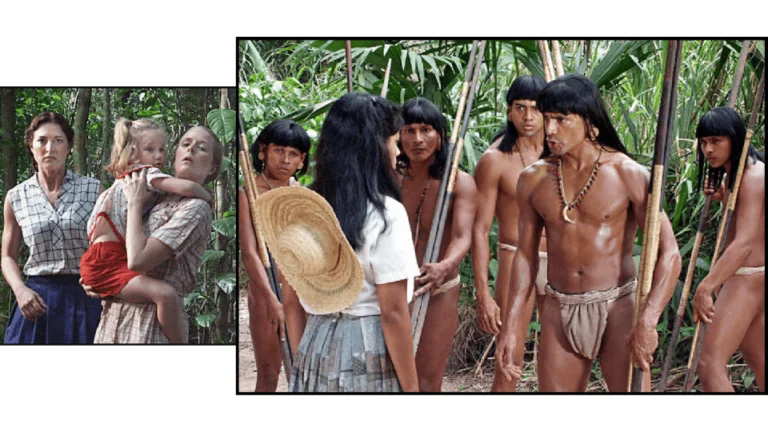
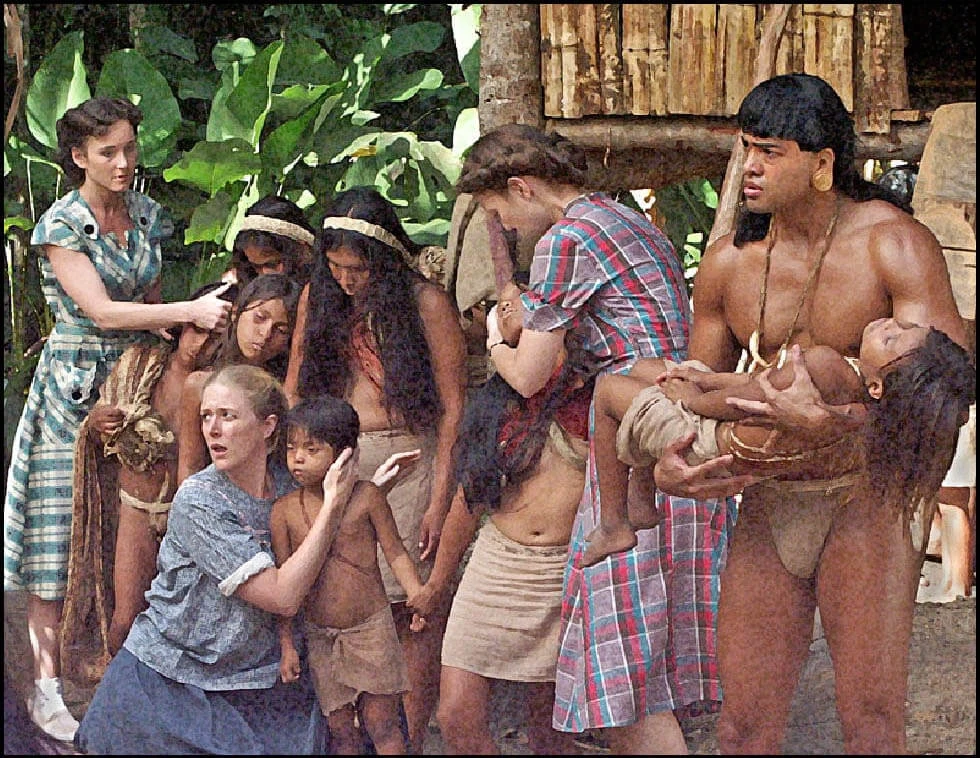
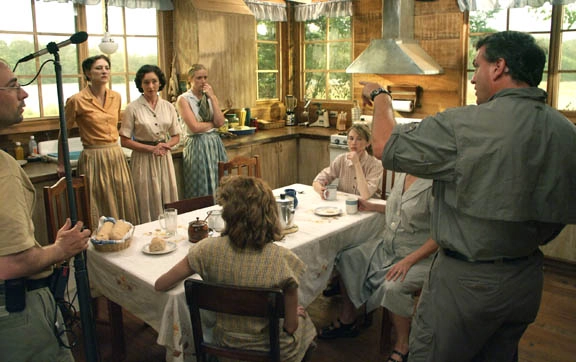
We not only film the good times, like the party scene above, but also the tender scenes when the wives and Rachel are told the men are confirmed dead. Steve Saint has a cameo appearance playing Frank Drown, who went with the soldiers on the
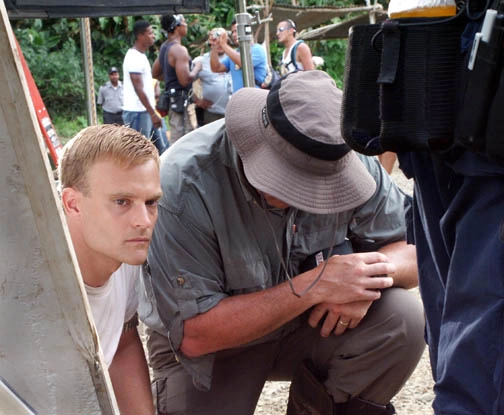
search in Waodani territory. I have gained trust by now to be closer to the action, however I find it ironic that many times during the first weeks of shooting in the great outdoors I was told to stay back, when here, in a much more confined and
delicate scene, I am allowed to lean through an opening and shoot quite close. Here is a sequence of pictures to give you a behind scenes view (my view) and also a picture of the real movie scene.
shooting a scene
shooting a scene
Palm Beach
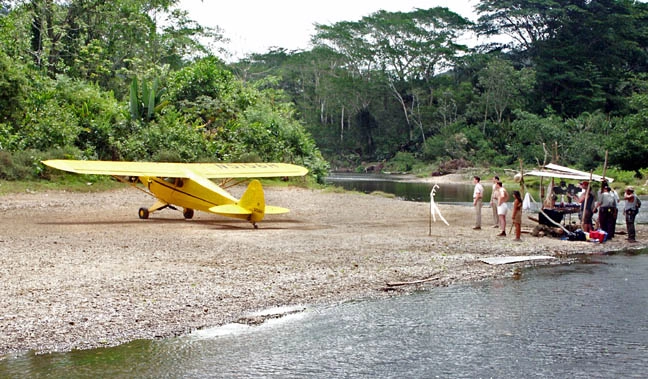
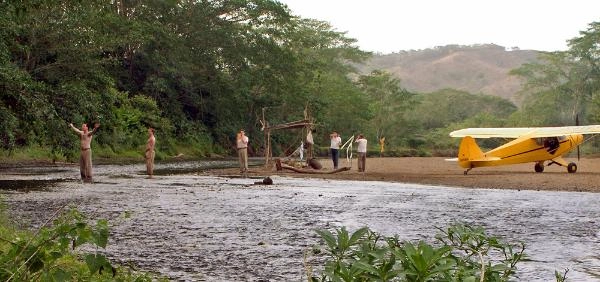
We shoot for a week in a coastal area of Panama by a small river with a sandbar just long enough to set the small airplane down. The missionaries in the story had spent 13 weeks dropping gifts and pictures and were now attempting to land and make personal contact. They did this surreptitiously because they wanted to avoid mission board red tape and they felt an urgency that the many oil company skirmishes with the Waodani might soon lead to a government crackdown and the extinction of the small tribe.
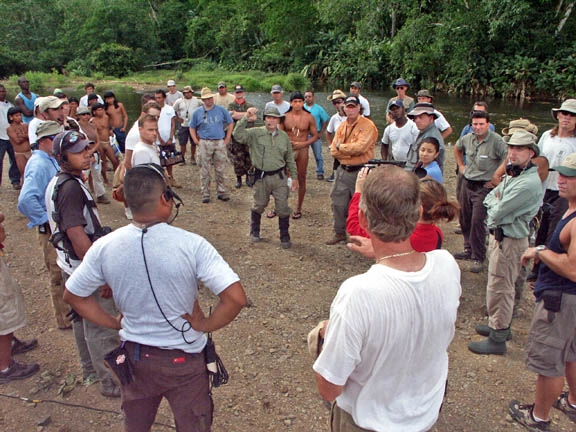
We have a safety meeting for all cast and crew about the dangers of the airplane and a helicopter involved with filming. The talk in English is translated into Spanish for the Panamanian crew members, as well as the Embera language for the many local tribal people who are portraying the Waodani.
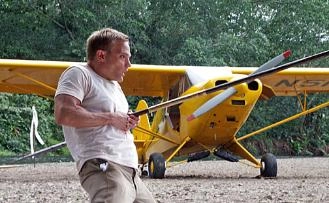
The set is cleared to film the first landing. We’re all pumping pure adrenaline as Steve Saint pilots the small yellow plane low through some huge, leafy trees, banks to line up with the river, banks again at the bend, then drops to the sand and brakes to a halt well before the sandbar ends. Many of us have a feeling of awe at seeing history come alive from nearly 50 years ago. My mind’s eye recalls the actual 1956 film footage of the plane landing from the documentary, Beyond the Gates of Splendor. Now it seems like I’m seeing it live. I am left with a tear in my eye and a lump in my throat, knowing both the tragic and miraculous outcomes of their efforts.
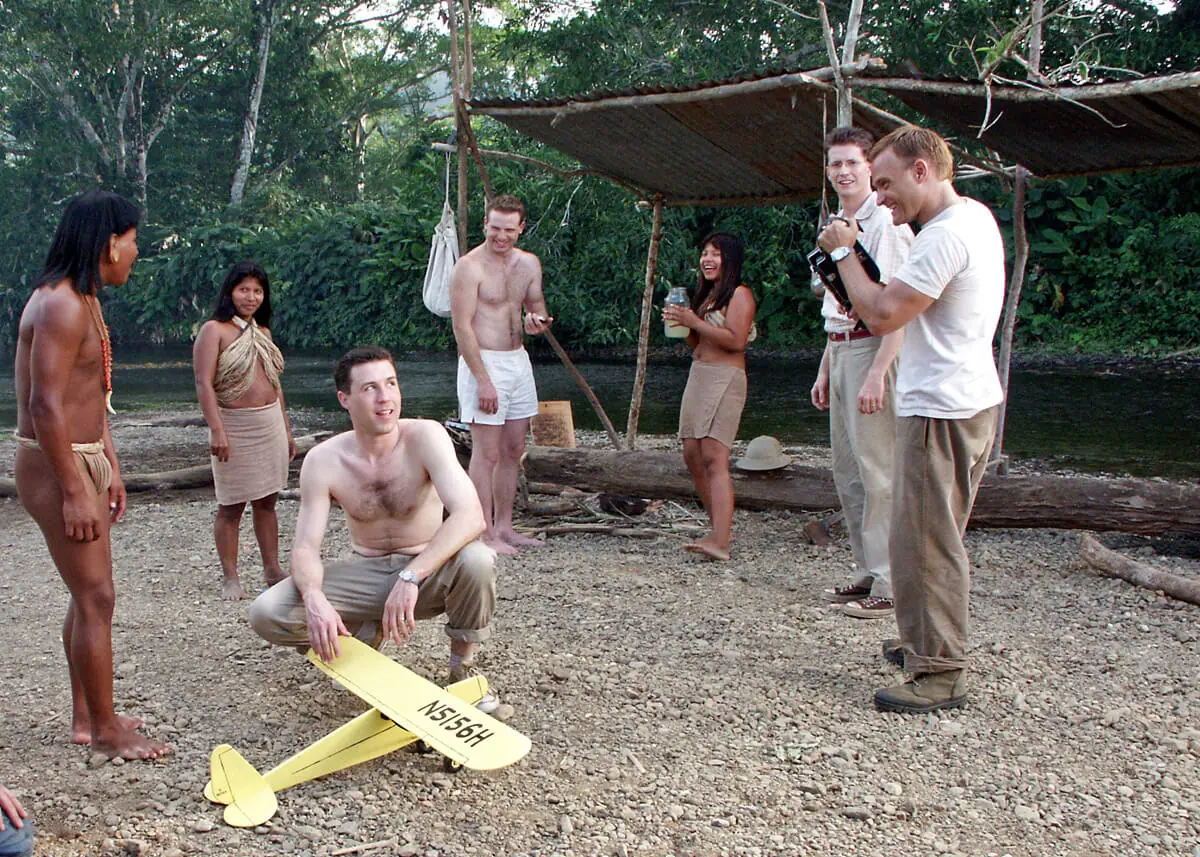
We film many happy moments re-creating how the five men meet three tribal people and attempt the use of a limited vocabulary of Waodani words. These “fifties” styled guys being portrayed are all heart as they excitedly film the natives in 16mm, drink lemonade from jars, and tell them “we are your sincere friends” in Waodani.
One of the men is Jim Elliot, born and raised in Portland Oregon. He has a pistol with him, but the plan is to only use it to scare the natives away if problems arise, not to shoot them. The men, and their wives, were well aware this was a dangerous mission. Much prayer and planning had gone into it.
After what is known as the “friendly encounter”, one of the Waodani visitors and his single girl companion are met in the jungle by a hunting party which demands to know why they are without their chaparone. Nenkiwi is now in a difficult spot. The girl’s brother is livid with rage at this breach of cultural norms and this could quickly turn into yet another spearing death among the tribe.
But Nenkiwi thinks quickly and tells a lie that the foreigners were after them, trying to kill them. This had happened before with oil company people and was completely believable. So the hunting party turns its rage to spear a different prey, and sets off to find the foreigners.
attack!
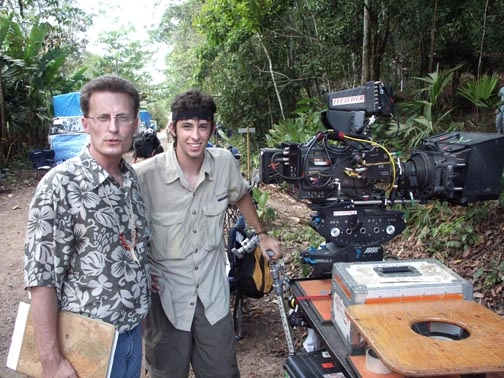
Now the crew is assembled at the sand bar the missionaries jokingly called, “Palm Beach.” No more cramped spots for me, but I still have to be very careful since there will be lots of action, spears being thrown, and intense death scenes acted out for high speed movie cameras. I’ve been accepted more lately to be part of the camera crew, or the “glob” as I call them because each camera is quite a large unit, often on a dolly cart, and always surrounded by three or four people, equipment, and a clutter of shading screens and rain fly’s; these provide needed protection for the camera people, but they are constantly an obstacle for me.
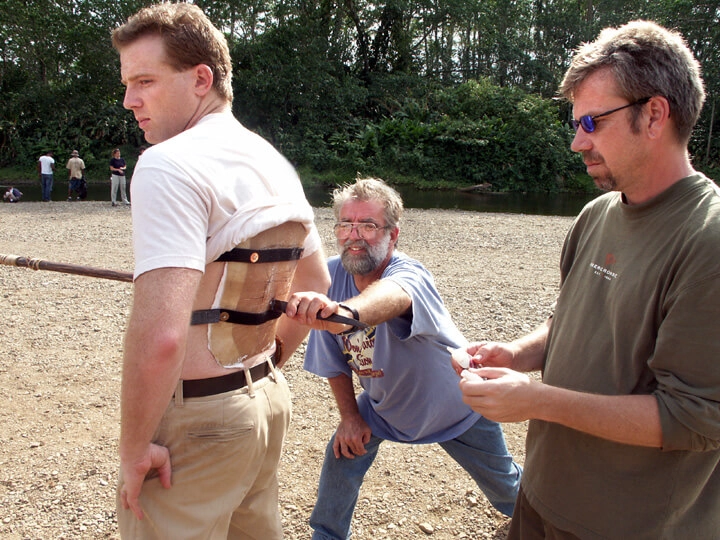
The props/fx team screws a long section of spear into a special harness that is under the actor’s shirts for the
attack scene. Red stain is applied, but not too much. The blood can’t run or drip or that will lead to an unwanted “R” rating. Similarly, the spears cannot be shown entering a body.
The throw can be shown, and then cut to the result. You can see in the film that this is certainly realistic enough.
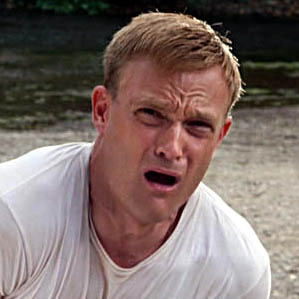
Everyone is quiet as we are ready to roll as Chad does a close up reaction shot to being speared in the gut. “Rolling”, says a production assistant. “QUIET!” yells the first assistant director, who is really the foreman of the whole set. Then, “Action”, and we hear a loud “hunhhhh” and labored breathing, gasping. I think: this guy is one good actor. Then, after another gasp, a sudden, guttural scream like I’ve never heard, “Ahhhhhrrrrrrggggg” and then choking. I could barely take the picture. It seemed every crew had their heart stop in synch. We had the sudden shock of what it must feel like to have an eight foot ironwood spear thrust into your midsection. Pure agony.
A crew member touches my shoulder and motions. Fifty yards away I see our pilot Steve Saint having just emerged from the bushes and peering at the bloodied actor now down on his knees. The man is portraying Steve’s real father, groaning and dying by the hands of the very men he was hoping to help.
As Chad slumped further down after the screams, I hear a soft, “cut” and no one moves or says one word. The director, Jim Hanon, steps forward and kneels down next to his talented actor, speaking softly to him; tenderness needed after the awful sadness and intensity in portraying such a good man sacrificing his life for the very people who killed him.
Steve Saint would later tell us, “I’ve grown up with this story my whole life, knowing my Dad had been killed this way, but I had never really thought of the sheer pain of it until I was approaching the set. As soon as I heard it I knew, and my eyes teared up. I was watching – and hearing – just how my Dad died.”
Life Magazine
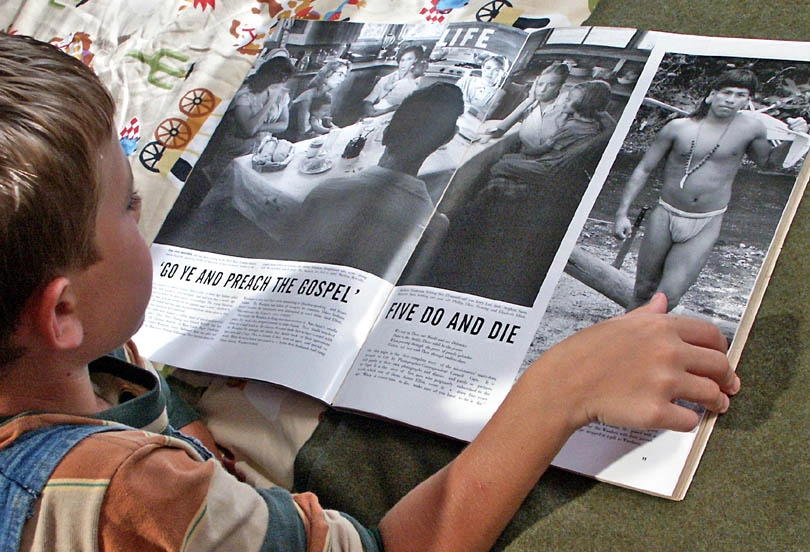
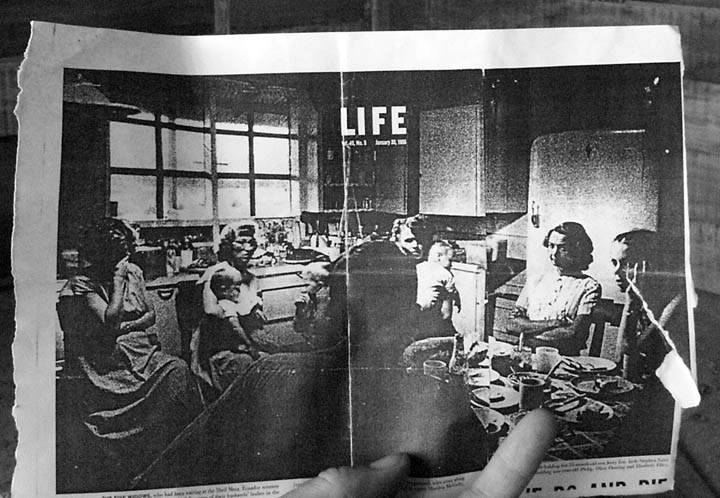
On a lighter note, my finest moment on the job is when I am called upon to re-create a famous Cornell Capa photo that ran in Life Magazine in 1956. Our little Stevie Saint character will be gazing at the issue in an upcoming scene, and the modern day Life Magazine has told us the prop must look exactly like the original – except for the fact that we will use our actors of course. I assemble the five widows in the kitchen of the Saint House and show them the photo we are re-creating. Wardrobe and props departments have already been involved, and I’ve already done some tests to get similar lighting. The photo seems to turn out well, and the Art department sends it off to a company in LA which will make our version of LIFE. It’s a fun day for me when we film Stevie looking over the magazine, and my handiwork looks just right. I always had a dream to be published in Life Magazine; in a way, I guess I finally did!
The women reach out
The next important part of the film centers around Betty Elliot and Rachel Saint, who learn more Waodani language and return to the tribe months after the killings at the request of Dayumae, who had a burning desire to reach her people with God’s love. Amid controversy, the women live with the tribe and are marveled at because they do not seek revenge. They teach that it is wrong to spear; that we must forgive and rely on God’s love and live in peace.
When an outbreak of polio occurs in a rival tribe the women, Kimo, and other God-followers rush to help, while the stubborn warrior Mincayani clings to the old ways of toughness and self-centeredness.
“No one took my father’s
life… he gave it.”
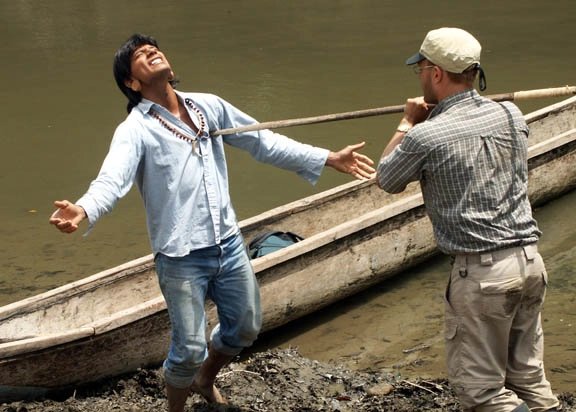
God eventually breaks through to Mincayani through the witness of the missionaries, his own people, and some tough circumstances. At Aunt Rachel’s funeral many years later, we see a wiser, more peaceful Mincayani. He and Steve then arrive at a crescendo of emotion on a canoe trip and the Spirit cuts through the pain both men have felt for many years about the killings and the price that was paid.
The intense encounter at the river’s edge did not actually take place for the real Mincaye and Steve, however the dramatic telling of the story needed a point of contention and conclusion on-screen – a fiery and gripping encounter between the two main characters – literally at the point of the spear, where this central issue of redemption is finally decided.
In Mincayani’s world, the killing of the five men should be avenged, he should be put to death. But in the world of Nate Saint, and his son Steve, the payment was made at the Cross, and Steve, rendered so very human in this scene, breaks through in agreement when he fiercely proclaims to Mincayani, “No one took my fathers life… he gave it.”
I have heard some criticism of the film for not being stronger about delivering the “gospel message.” But the way I understand it is that the producers wanted to make a film that was (emotionally) accessible to a wide, public market, so they strove to tell the story toward that end, and in my mind, struck the balance beautifully. And really, this story doesn’t need to verbally preach a gospel message… this amazing story IS the gospel message.
Certainly the message of dedication to God is not without controversy, (whether from the Village Voice or your own neighbor or a family member) but in this case, peace does prevail for the tribe, reducing the homicide rate by 90%. And in years following, the stubborn warrior Mincayani, the one who speared Nate Saint, becomes family with Steve Saint – and even a grandfather to Steve’s own children.
And as the Steve Saint character says so simply and poignantly at the end of the film, “I think my Dad would have liked that.”
Never before have so many Waodani men and women lived to be grandparents. And one needs only to catch a glimpse of the bright smile of Mincaye, or to see him dancing with Jesse Saint in “Beyond the Gates of Splendor”, to see that a new spirit resides in this warrior. The old man is gone, behold the new.
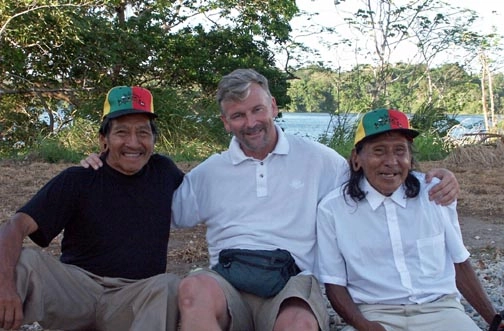
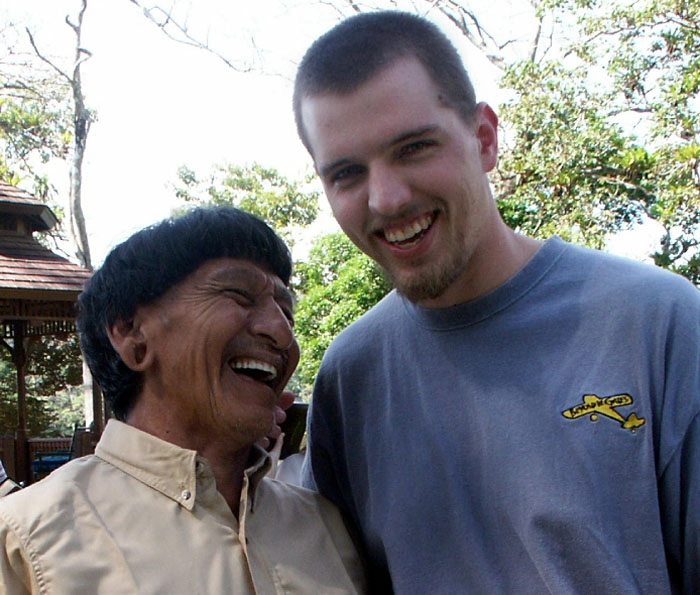
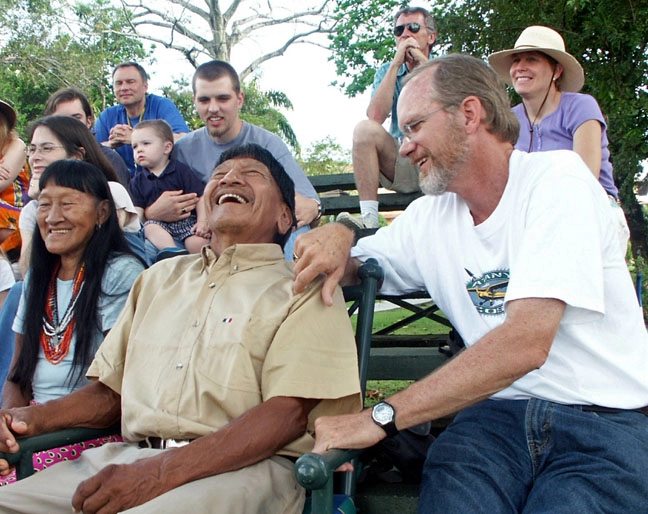
Here are a couple of pictures taken at the beginning of production during the Sunday morning Bible studies at the Hotel Melia led by Steve Saint. At left are Jesse Saint and his grandfather Mincaye, and at right are Ompodae, Mincaye and Steve Saint.
After ten weeks in the jungles and rivers of Panama, we “wrap” production and the crew scatters again to their homes: grips and several camera people back to Canada, electricians to Oklahoma, make-up, props, and our stunt coordinator back to Hollywood. The local Embera people, amazing actors all, return to their villages, and the Panamanians head back to Panama City. I fly back to Oregon with an all-world adventure of working on a movie set to bring one of the most incredible Christian stories of the last hundred years to life on the big screen for theaters (and homes and churches) across the country.
I saw the film four times with friends and family and enjoyed seeing my tiny name among the many credit lines – Still Photographer, Robert Bowling. I even got a standing ovation and total embarrassment from my friends Aron and Yvonne during one showing! But most gratifying of all was seeing so many names of people I now count as friends as we toiled in the Panama jungle side-by-side to bring this story to life.
It may be a bit rough here and there, and the subtitled dialogue often requires rapt attention, but overall, the cinematography is gorgeous, the acting is genuine and engaging, and the message is more crucial than ever for our culture… and the whole world to hear.
The film helps us feel the pain of violence and loss, and also what can happen when people forgive and seek – even pursue – reconciliation; both much-needed if we are to change our own hot-headed culture, bring healing to disputes in our own families, and, whether metaphorically or literally, do our utmost to bring an End to the Spear.
"HE IS NO FOOL WHO GIVES UP WHAT HE CANNOT KEEP, TO GAIN WHAT HE CANNOT LOSE."
FOR MORE INFORMATION ON THIS SUBJECT SEE
End of the Spear – a movie drama based on actual events.
Beyond the Gates of Splendor – a feature length documentary with interviews of all five widows, the Waodoni warriors and other real life participants.
END OF THE SPEAR RELATED Books
End of the Spear, by Steve Saint Through Gates of Splendor, by Elisabeth Elliot
Jungle Pilot, by Nate Saint The Savage, My Kinsman, by Elisabeth Elliot